Skip to content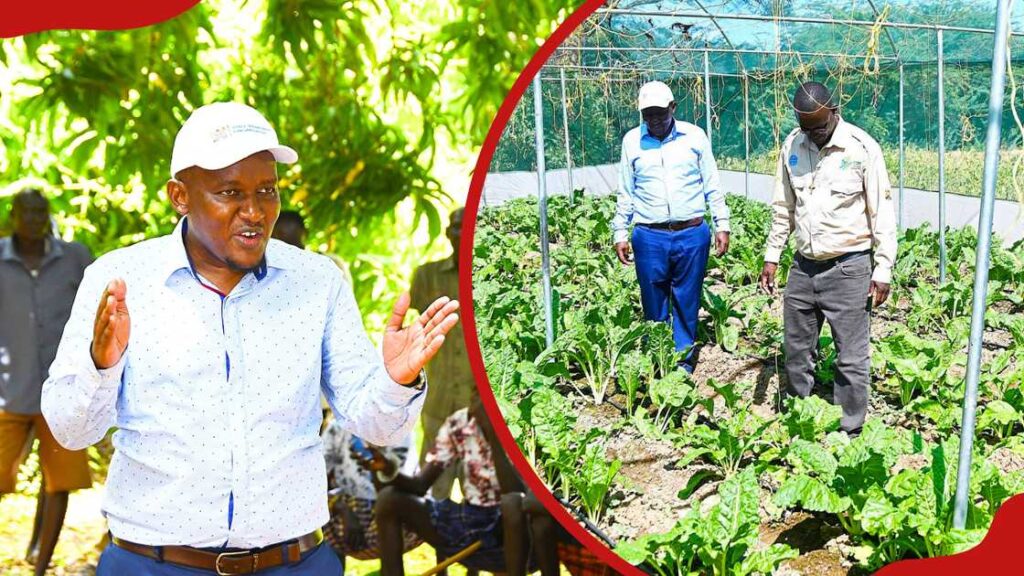
Turkana County is ramping up efforts to transform its largely arid landscape into a productive agricultural hub through strategic irrigation development, as part of Kenya’s broader plan to boost food security.
The national government, through the State Department for Irrigation, is targeting an additional two million acres under irrigation, with Turkana projected to contribute about 200,000 acres—roughly 10 percent of the overall target.
According to Irrigation Principal Secretary Ephantus Kimotho, the plan involves harnessing laggah flows, seasonal rivers, and underground water sources, which will be stored in key infrastructure projects to support sustainable farming.
“We are looking at expanding irrigation through strategic investments that will enable regions like Turkana to fully utilize available water resources and boost food production,” he said.
Flagship projects under implementation include the Turkwel Dam and Lowaat Dam, which form part of President William Ruto’s 50 mega dams agenda aimed at enhancing water access and agricultural productivity.
On April 8, Kimotho, accompanied by Turkana County Chief Officer for Agriculture David Maraka, conducted an inspection tour of key irrigation sites across the county.
The visit included the Nanyee Irrigation Scheme along the Turkwel Earth Dam in Loima, as well as the Alfred Powery Irrigation Project. The tour focused on assessing infrastructure and identifying solutions to improve water distribution, efficiency, and agricultural output.
The Turkwel Dam, with a capacity of about 2.6 million cubic metres, remains central to irrigation efforts in the region. However, the Nanyee Irrigation Scheme, which currently covers approximately 7,000 acres, faces water management challenges.
Ongoing interventions—including the construction of embankments, canals, and enhanced water abstraction from the Turkwel River—are expected to expand the scheme to about 10,000 acres.
During the tour, Kimotho also commissioned a micro-irrigation project at Alfred Powery School, where about two acres have been set aside for farming, with half an acre already developed.
The project, supported by a high-yield borehole, is expected to boost food production, support school feeding programmes, and benefit the surrounding community. Local stakeholders have, however, called for expanded water storage and irrigation coverage to maximize output.
Despite the progress, water scarcity remains a major challenge in Turkana, compounded by poor infrastructure, limited irrigation systems, and widespread siltation that affects the efficiency of existing projects.
Kimotho noted that ongoing and planned investments are aimed at addressing these challenges while strengthening food security, promoting sustainable agriculture, and improving livelihoods across the county.
By: Catherine Kamunyo