Skip to content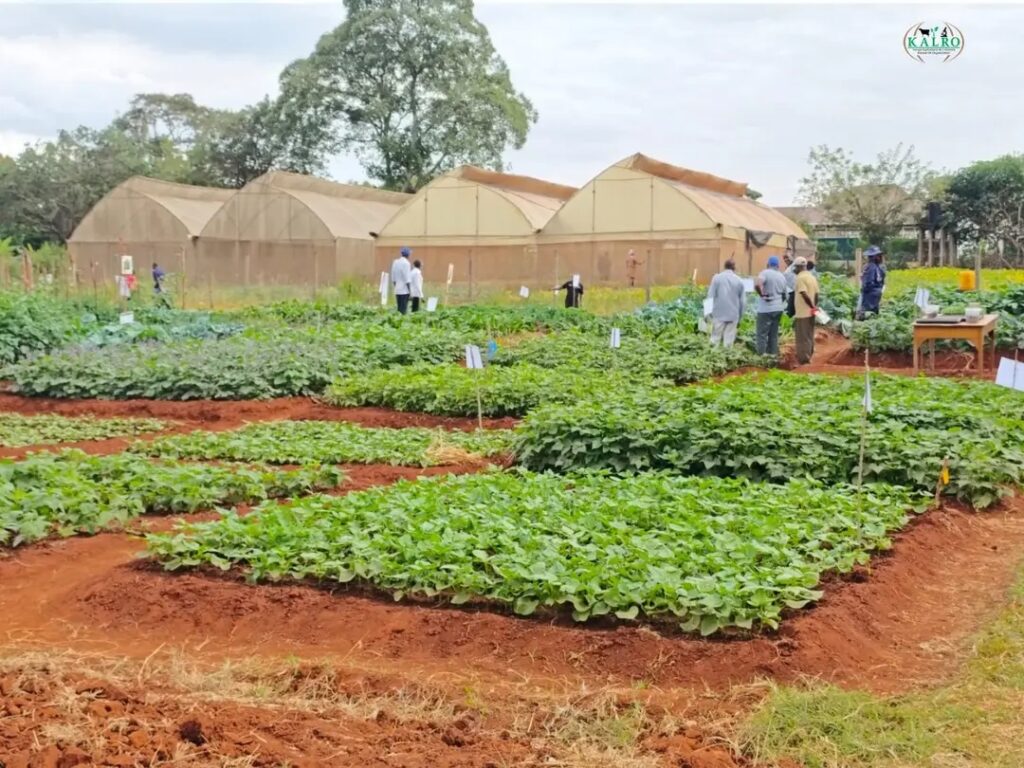
The Kenya Agricultural and Livestock Research Organization (KALRO) – Horticulture Research Institute has intensified its push for market-driven agricultural research following the official opening of its annual Open Week, which brought together farmers, stakeholders, development partners, researchers, and value chain players from across the country.
The event, held at the institute, served as a platform for showcasing innovative agricultural technologies, strengthening partnerships, and exploring strategies for transforming research outputs into commercially viable solutions that directly benefit farmers.
Officially opening the event, Dr. Joseph Kori, Institute Director at the Horticulture Research Institute, alongside Deputy Institute Director Dr. Daniel Gikaara, welcomed participants and emphasized the importance of collaboration in accelerating agricultural transformation.
Speaking during the event, Dr. Kori noted that the institute remains committed to ensuring that research innovations reach farmers and contribute meaningfully to food security and economic growth.
“We must continue building strong partnerships that allow our technologies to move from the laboratory to the farm and ultimately to the market. Research should not end at discovery; it should improve livelihoods and create economic opportunities for farmers,” said Dr. Kori.
A major theme that emerged throughout the day was the need for research institutions to become more results-oriented and commercialization-focused. Stakeholders discussed strategies for strengthening value chains by creating seamless linkages from research to production and market access.
Among the proposals highlighted were the establishment of quarter-acre orchard demonstration plots, expansion of floriculture demonstration sites, and strengthening vegetable value chains to increase productivity and farmer incomes.
The event’s chief guest, Dr. Alice Murage, Deputy Director General for Crops at KALRO, challenged scientists to focus on research impact rather than research processes alone.
“Open Week gives us an opportunity to connect directly with farmers and partners, showcase our technologies, and tell our story firsthand. The real measure of success is not how much research we conduct, but how effectively that research changes lives,” she said.
Dr. Murage urged researchers to embrace commercialization of technologies, strengthen partnerships for scaling innovations, and explore sustainable financing mechanisms to support research activities.
“We must move beyond generating knowledge and focus on creating impact. Research should translate into food on the table and money in the pocket for farmers. That is the ultimate goal of our work,” she added.
She further emphasized the importance of teamwork, innovation, and strategic communication, encouraging scientists and staff to leverage social media platforms and digital tools to increase awareness and adoption of agricultural technologies.
Participants at the event reaffirmed the critical role of partnerships in accelerating service delivery to farmers and ensuring innovations reach end users more effectively.
Representing stakeholders, Mr. Timon Moi, Centre Director at Kibos, pledged continued collaboration with the institute and highlighted the value of benchmarking and knowledge-sharing initiatives.
“Partnerships remain central to driving innovation and improving agricultural outcomes. We look forward to continued collaboration and benchmarking opportunities that will strengthen our collective impact,” said Mr. Moi.
Farmers attending the Open Week had the opportunity to interact directly with researchers, view demonstration plots, and learn about new technologies aimed at improving productivity, resilience, and profitability in horticultural enterprises.
As the event continues, stakeholders expressed optimism that stronger partnerships, enhanced commercialization efforts, and farmer-centered innovations will contribute significantly to transforming Kenya’s horticultural sector.
The message from the gathering was unequivocal: research must deliver tangible benefits to farmers. Through collaboration, innovation, and strategic investment in technology scaling, KALRO aims to ensure that scientific discoveries translate into sustainable agricultural growth, improved food security, and increased incomes for farming communities across the country.
By: Samuel Mwangi