Skip to content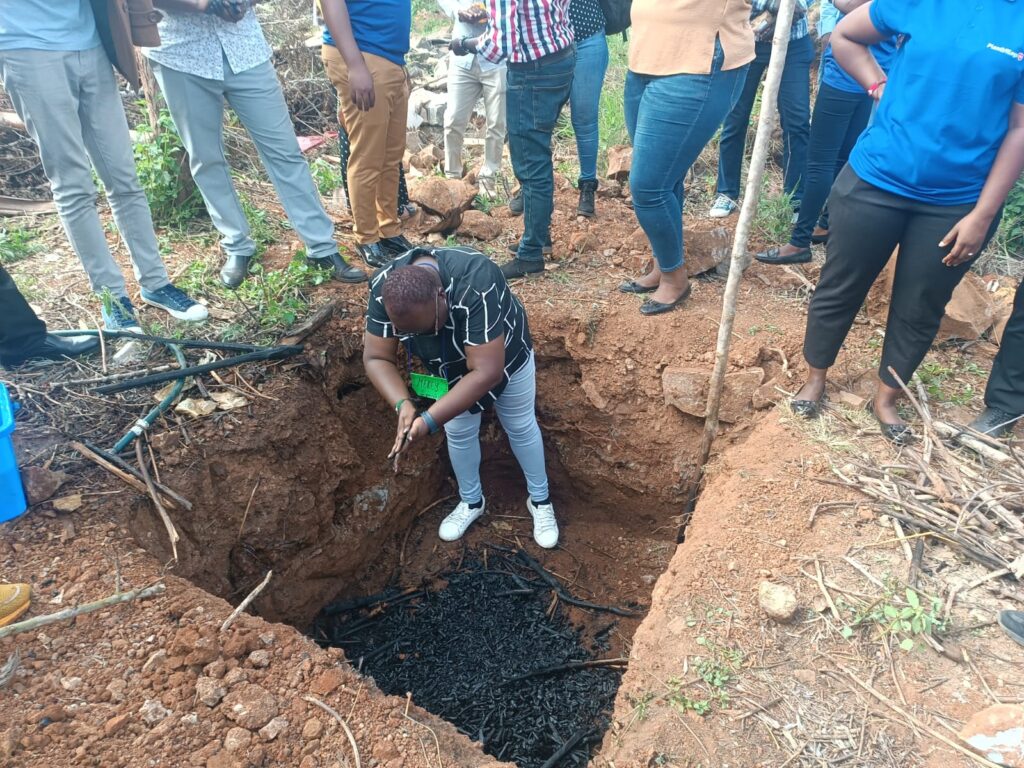
Biochar is increasingly being promoted as a game-changing solution in agriculture, with experts and farmers citing its potential to improve soil fertility, increase food production, and help mitigate climate change.
The charcoal-like substance is produced by heating biomass under limited oxygen through a process known as pyrolysis. The resulting product is a porous, carbon-rich material that improves soil properties by enhancing water retention, boosting microbial activity, and increasing nutrient availability.
Agricultural experts say biochar also reduces the release of harmful greenhouse gases such as methane and nitrogen dioxide from the soil while improving the ability of plant roots to absorb minerals. Additionally, it helps capture carbon from decomposing organic matter, making it an effective tool for carbon sequestration and climate change mitigation.
Despite being an ancient practice, biochar has not been widely adopted in many parts of Africa. However, stakeholders are now intensifying efforts to create awareness and encourage farmers to embrace the technology.
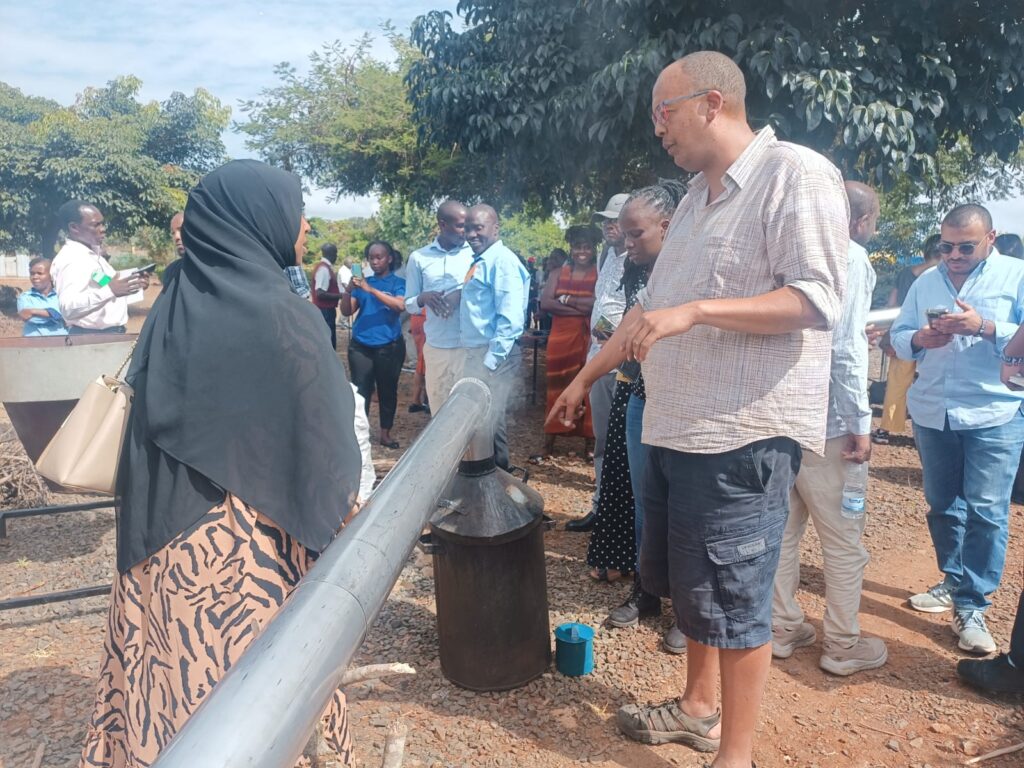
Recently, the International Biochar Initiative and Circular Bio-nutrient Economy Network organized the first biochar academy in Africa in Murang’a County. The forum brought together researchers, farmers, private companies, and policymakers to discuss how biochar production and use can be expanded.
According to Luisa Marin, the initiative seeks to educate communities on the importance of biochar in sustainable farming and environmental conservation.
“We are using this educational platform to understand how biochar is being produced locally, identify training gaps, and provide technical assistance to communities,” said Marin.
She explained that farmers can utilize agricultural residues left after harvesting, which account for a significant percentage of farm waste, to produce biochar instead of allowing the waste to decompose openly and emit greenhouse gases.
“Instead of letting agricultural waste rot and release harmful gases into the atmosphere, farmers can convert it into biochar, which has numerous benefits,” she added.
Marin noted that farmers using biochar can reduce water usage, lower dependence on chemical fertilizers, and increase food production. She also explained that the practice dates back thousands of years to ancient civilizations in the Amazon region, although industrial-scale production only started about 15 years ago.
Biochar was introduced into the global voluntary carbon market five years ago, allowing farmers and producers to generate carbon credits through its production.
Samuel Thuo said the academy attracted stakeholders from 40 companies across 14 countries for consultations and practical demonstrations on converting agricultural waste into biochar.
“Most farmers either burn farm waste or leave it to rot, yet it can be transformed into a valuable resource that improves farming and protects the environment,” said Thuo.
He added that biochar can be mixed with animal manure to create organic fertilizer with improved soil benefits.
Meanwhile, Johannes Lehmann said Sub-Saharan Africa has the potential to become self-sufficient in fertilizer production by recycling agricultural waste into biochar.
Farmer Kioko Mwangangi, who has used biochar on his citrus orchard for three years, said the practice has significantly improved his farming.
“Biochar has reduced water use, increased yields, and lowered the cost of farm inputs,” he said.
Mwangangi noted that he mixes biochar with poultry and cattle manure before applying it to his farm as organic fertilizer, a practice he says has transformed his production.
By: Rebecca Wangari