Skip to content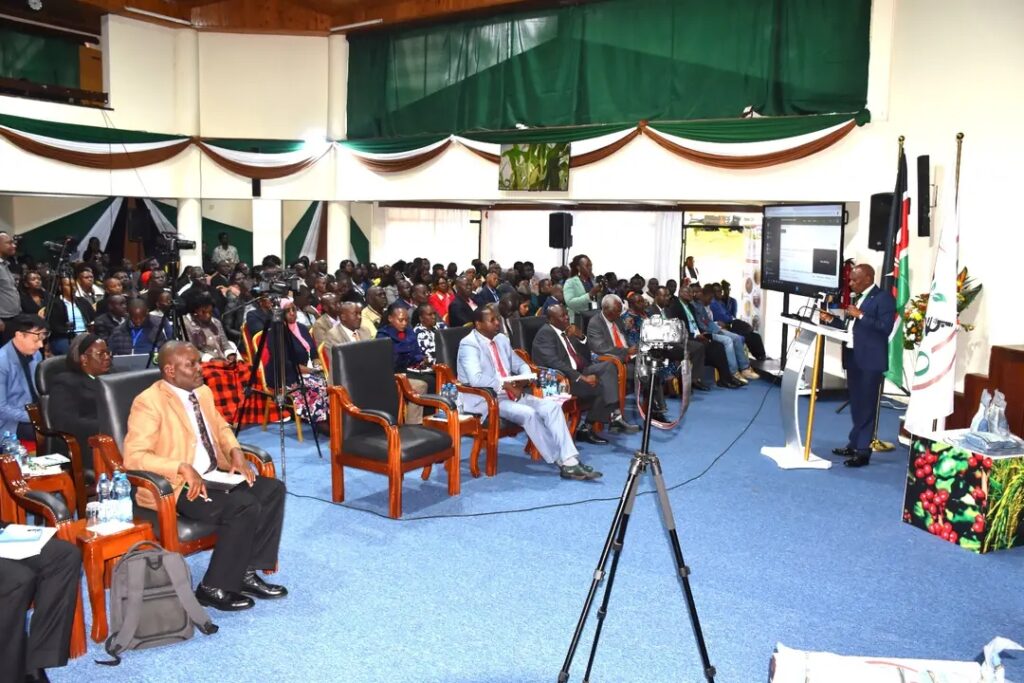
Kenya’s fight against aflatoxin contamination has received renewed attention, with the Chairman of the KALRO Board, Dr. Thuo Mathenge, calling for urgent action to increase awareness and adoption of technologies designed to safeguard public health and food security.
Speaking during the 2nd KALRO Scientific Conference and Innovation Expo, Dr. Mathenge warned that aflatoxins remain one of the most serious hidden threats affecting Kenya’s food systems, particularly in staple crops such as maize, sorghum, and groundnuts.
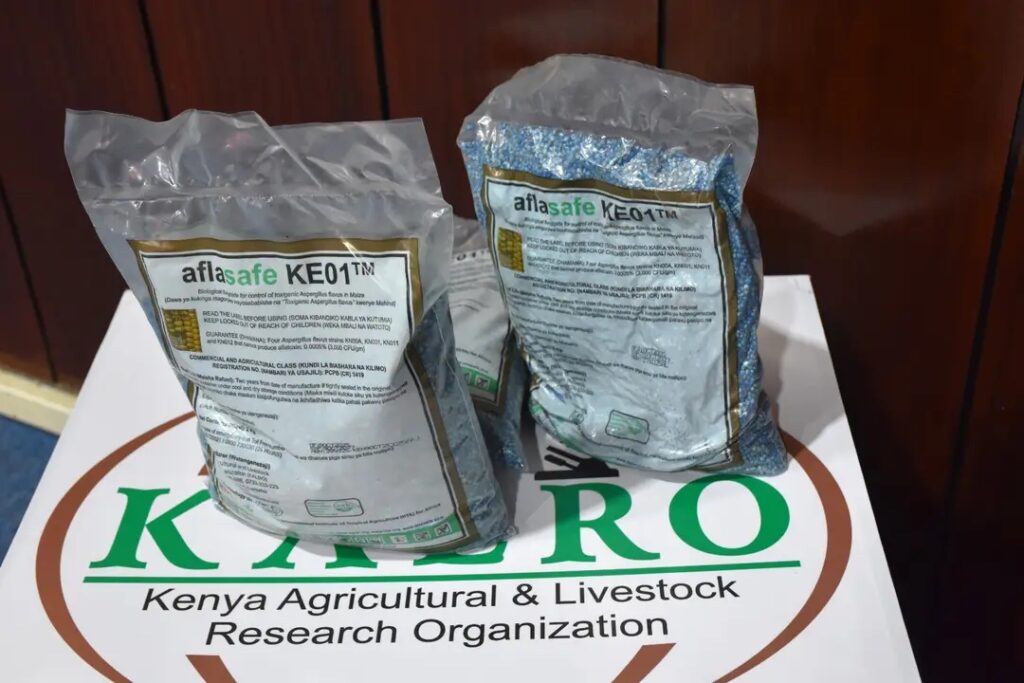
The conference highlighted how KALRO’s innovative biological solution, Aflasafe KE01, is helping farmers significantly reduce contamination levels and produce safer food for consumers.
Dr. Mathenge noted that aflatoxins have been associated with severe health complications, including liver cancer, weakened immune systems, stunted growth among children, and reduced productivity in livestock.
“Mahindi bila Aflasafe si safe,” Dr. Mathenge said, emphasizing the importance of adopting proven technologies to protect both farmers and consumers from the dangers of contaminated food.
He recalled the devastating aflatoxin outbreaks that claimed lives in parts of Eastern Kenya several years ago, adding that despite ongoing interventions, contamination continues to pose a significant risk to millions of Kenyans.
According to Dr. Mathenge, one of the most effective ways of addressing the challenge is through the widespread adoption of Aflasafe KE01, a biological control technology developed by KALRO to combat aflatoxin contamination before crops are harvested.
The innovation works by introducing beneficial strains of naturally occurring fungi into the field. These friendly fungi outcompete the harmful aflatoxin-producing strains, dramatically reducing contamination levels in crops. Research has shown that the technology can lower aflatoxin contamination by as much as 98 percent, making food significantly safer for consumption and trade.
Beyond protecting public health, Dr. Mathenge said the technology also offers economic benefits to farmers by improving the quality of their produce and increasing access to premium local and international markets that require strict food safety standards.
He observed that while KALRO has already developed an effective solution, the next major challenge is ensuring that more farmers are aware of the technology and adopt it in their production systems.
To accelerate adoption, Dr. Mathenge appealed to the Chairperson of the National Assembly Committee on Agriculture and Livestock, Dr. Mutunga, to champion the fight against aflatoxin contamination through legislative action.
He urged Parliament to consider measures that would promote or require the use of Aflasafe in areas prone to aflatoxin contamination, saying such a move would help protect millions of consumers while strengthening food safety standards nationwide.
Dr. Mathenge also called upon the media to play a more active role in educating the public about the dangers of aflatoxins and the technologies available to combat them.
In addition to Aflasafe KE01, he highlighted other innovations developed by KALRO, including the Tajirika cassava variety, which is drought-tolerant, disease-resistant, and capable of producing significantly higher yields than conventional varieties.
He noted that Tajirika cassava presents new opportunities for value addition through the production of flour and starch, helping reduce Kenya’s dependence on imported starch while creating additional income opportunities for farmers.
Dr. Mathenge said embracing innovations such as Aflasafe KE01 and Tajirika cassava is critical to building a more resilient agricultural sector capable of producing safe food, improving farmer incomes, and enhancing national food security.
“As we move forward, the focus should be on ensuring that farmers have access to technologies that not only increase productivity but also guarantee the safety and quality of the food reaching consumers,” he said.
The conference showcased how research-driven innovations continue to position KALRO at the forefront of addressing agricultural challenges and supporting the transformation of Kenya’s food systems.
By: Samuel Mwangi