Skip to content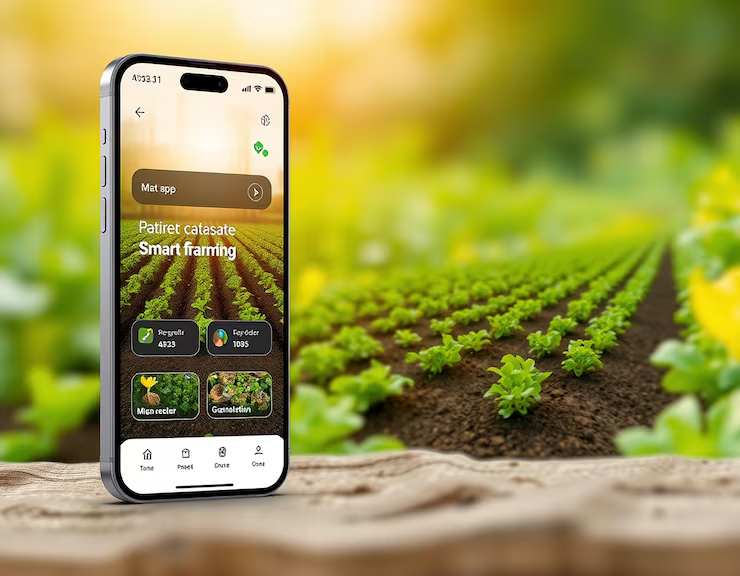
Farmers across Kenya are increasingly adopting technology to improve productivity, reduce losses, and modernize agricultural practices as the sector embraces digital transformation.
Innovations such as mobile farming applications and data-driven crop monitoring tools are helping farmers make informed decisions on crop management, pest control, and livestock production.
One of the initiatives driving the shift is a programme by Digital Green, which has introduced a mobile application known as Farmer Chat targeting small-scale farmers in rural areas.
The application provides farmers with tailored information depending on the type of farming enterprise they are engaged in, enabling them to improve yields and adopt better farming methods.
According to Jackline Wambui, the programme is currently in its pilot phase and has reached about 200,000 farmers across six counties.
She explained that the AI-powered platform allows farmers to ask questions about challenges affecting their farms and receive prompt guidance.
“The application gives advisory information to farmers on crops and animal husbandry, and they are able to apply the recommendations in their farms,” said Wambui.
She added that around 30 percent of registered users are highly active on the platform, frequently seeking guidance, while nearly 70 percent have reported increased production after using the app.
“Many farmers using the platform have recorded better yields and are now sharing the knowledge with others in their communities,” she noted.
However, Wambui cited weak and unreliable mobile network coverage in some rural areas as a major challenge limiting access to digital advisory services.
She also noted that once installed, the application is free to use, making it more accessible to smallholder farmers.
In partnership with other stakeholders, Digital Green is also helping farmers access markets by connecting them with nearby schools that can purchase produce for feeding programmes.
“We may not have direct market access, but we are leveraging existing systems such as school feeding programmes to help farmers sell their produce,” she said.
The pilot programme is currently being implemented in Nyeri, Nakuru, Nandi, Laikipia, Murang’a, and Kiambu counties, with plans for expansion after evaluation.
Meanwhile, Participatory Ecological Land Use Management Kenya is collaborating in the initiative by promoting agroecological farming among smallholder farmers.
PELUM Kenya Head of Programmes Manei Naanyu said the organisation will establish agroecological kitchen gardens in public primary schools to serve as learning centres for pupils and surrounding communities.
“PELUM will create awareness among farmers on growing organic foods, which are healthier, while working with 2,700 smallholder farmers across six sub-counties,” said Naanyu.
She said the organisation has been training farmers on agroecology, although adoption remains low, expressing optimism that more farmers will embrace sustainable farming methods over time.
Naanyu added that one of the key focus areas is teaching farmers how to make organic manure and natural herbicides to reduce dependence on synthetic chemicals.
“Growing food organically can open up global market opportunities for farmers and increase their incomes,” she said.
By: Samuel Mwangi