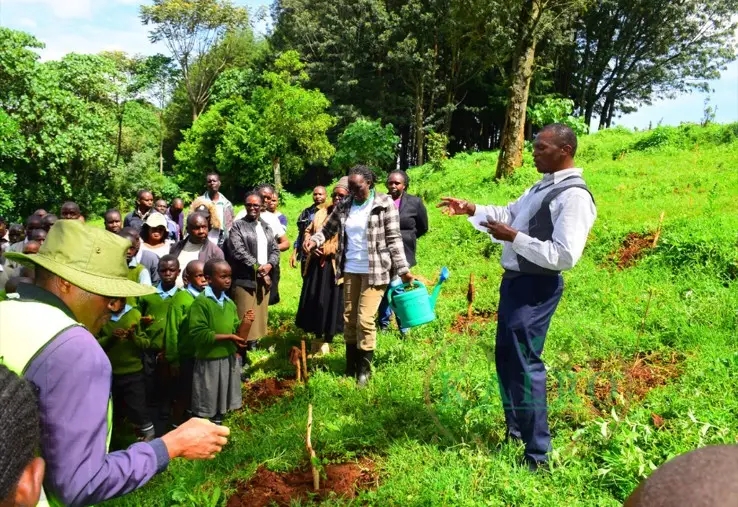
In a vibrant demonstration of unity and environmental stewardship, the Tea Research Institute (KALRO–TRI) successfully held a Tree Planting Day on Thursday, April 30, 2026, at the Institute grounds near the Estate Residential Camp (China Block). The event brought together staff, learners, and the wider TRI community, who gathered at Utafiti Comprehensive School gate in a shared commitment to a greener and more sustainable future.
The exercise was coordinated by Dr. Koech on behalf of the Institute’s management, ensuring smooth organization and active participation across all groups. Dr. Ochanda presided over the event as chief guest, delivering the Institute Director’s message on behalf of Ms. Lilian Kerio.
Speaking during the event, Dr. Ochanda emphasized the importance of collective responsibility in environmental conservation, noting that such initiatives go beyond institutional obligations. “Tree planting is not just an activity we undertake today; it is a long-term investment in our environment, our agriculture, and future generations. Every seedling planted is a step towards restoring ecological balance and combating climate change,” he said.
In her message, Ms. Lilian Kerio commended the TRI community for their strong participation and reaffirmed KALRO–TRI’s commitment to environmental conservation and climate resilience. “Tree planting remains a key pillar in our sustainability agenda and a practical contribution to Kenya’s national target of planting 15 billion trees by 2032. I urge every staff member and learner to take this responsibility seriously and make it a continuous practice,” she stated.
Dr. Koech lauded the turnout and coordination of the exercise, highlighting the importance of individual effort in achieving collective impact. “By encouraging each participant to plant at least 30 seedlings, we are instilling a culture of personal responsibility. The success of today’s exercise demonstrates what we can achieve when we work together with a shared purpose,” he noted.
Aligned with KALRO–TRI’s internal sustainability efforts, participants were encouraged to plant at least 30 tree seedlings each, reinforcing a culture of accountability in environmental stewardship. By the end of the exercise, a total of 1,350 tree seedlings had been planted.
The event stood as a powerful testament to collective action, strengthening collaboration within the TRI community and reinforcing KALRO–TRI’s leadership in translating national environmental goals into meaningful on-the-ground impact—one tree at a time.
By: Samuel Mwangi