Skip to content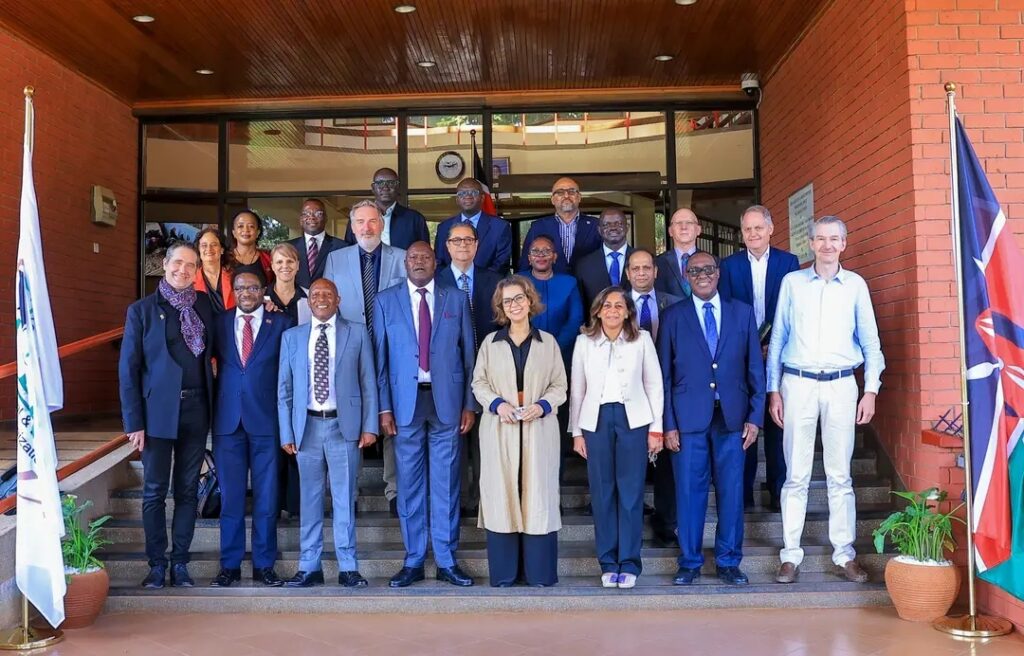
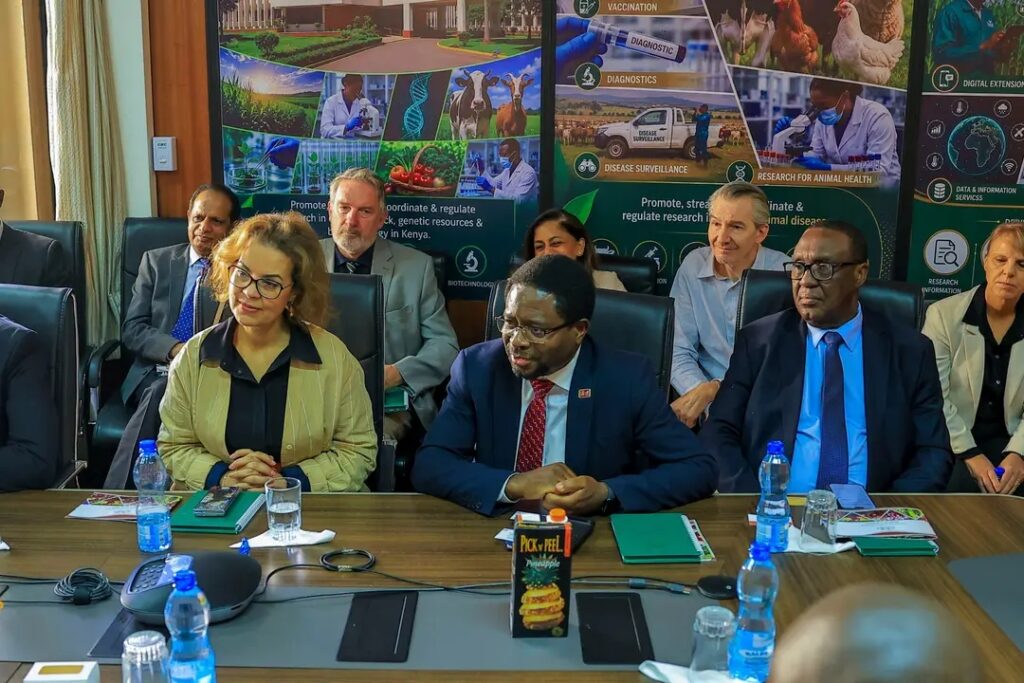
The delegation was led by Dr. Ismahane Elouafi, Executive Managing Director of CGIAR, and accompanied by Prof. Appolinaire Djikeng, Director General of the International Livestock Research Institute. The team was warmly received at KALRO headquarters by Dr. Patrick Ketiem, Director General of KALRO, Dr. Thuo Mathenge, Chairman of the KALRO Board, alongside senior directors and researchers from the organization.
The discussions focused on strengthening the strategic partnership between KALRO and CGIAR, a collaboration that has significantly contributed to advancing agricultural research, innovation, and technology dissemination across Kenya and the broader African region.
Speaking during the meeting, Dr. Patrick Ketiem underscored the importance of partnerships in driving agricultural transformation and addressing emerging challenges facing the sector.
“KALRO has achieved remarkable progress through its collaboration with CGIAR and other international research partners. These partnerships have enabled us to generate and disseminate technologies and innovations that improve productivity, strengthen food security, and enhance livelihoods. However, the growing impacts of climate change continue to pose serious challenges to agricultural systems. We must therefore work together to develop practical, science-based solutions that deliver measurable impact for farmers and farming communities,” said Dr. Ketiem.
He noted that research institutions have a critical role to play in ensuring that farmers have access to climate-smart technologies capable of improving resilience against droughts, pests, diseases, and other climate-related risks.
KALRO Board Chairman Dr. Thuo Mathenge emphasized that collaboration remains the cornerstone of successful agricultural development initiatives.
“The benefits of research can only be fully realized when institutions work together. No single organization can address the complex challenges facing agriculture on its own. Through strong partnerships, knowledge sharing, and coordinated action, we can ensure that farmers receive the support, innovations, and technologies they need to thrive,” said Dr. Mathenge.
The Chairman further highlighted the need for stronger linkages between research institutions, policymakers, development partners, and private sector actors to accelerate the adoption of innovations at scale.
Leading the CGIAR delegation, Dr. Ismahane Elouafi reaffirmed CGIAR’s commitment to working closely with KALRO and other national agricultural research systems to transform food systems and improve livelihoods.
“Partnerships such as the one between CGIAR and KALRO are essential for delivering meaningful impact. Our focus must be on scaling innovations beyond research stations and laboratories so that farmers can benefit directly. At the same time, agriculture presents enormous opportunities for youth employment, entrepreneurship, and economic growth. By investing in innovation and collaborative research, we can create solutions that improve food security while generating opportunities for future generations,” Dr. Elouafi said.
She emphasized that innovation must remain farmer-centered, ensuring that scientific advancements translate into practical benefits at the farm level while contributing to sustainable agricultural development.
Prof. Appolinaire Djikeng echoed these sentiments, highlighting the importance of integrated research approaches that address both crop and livestock systems to strengthen food security and resilience across Africa.
The visit comes at a significant moment as KALRO prepares to host the 2nd KALRO Scientific Conference, a premier platform that will bring together researchers, policymakers, development partners, private sector players, and other stakeholders to showcase cutting-edge innovations and discuss solutions to emerging agricultural challenges.
The conference is expected to highlight research achievements, promote knowledge exchange, and foster strategic partnerships aimed at accelerating agricultural transformation in Kenya and beyond. Key themes will include climate resilience, sustainable food systems, agricultural commercialization, digital agriculture, and youth engagement in agribusiness.
The engagement between KALRO and the CGIAR leadership underscores a shared commitment to strengthening research partnerships, accelerating innovation uptake, and building resilient agricultural systems capable of withstanding the effects of climate change.
As global food systems face increasing pressure from climate variability, population growth, and resource constraints, leaders from both institutions reaffirmed the importance of science-driven solutions and collaborative action in ensuring a sustainable and food-secure future for farmers and communities across Africa.
The visit concluded with a renewed commitment to deepen cooperation, leverage collective expertise, and accelerate the delivery of impactful innovations that improve livelihoods, enhance resilience, and drive inclusive agricultural growth.
By: Samuel Mwangi