Skip to content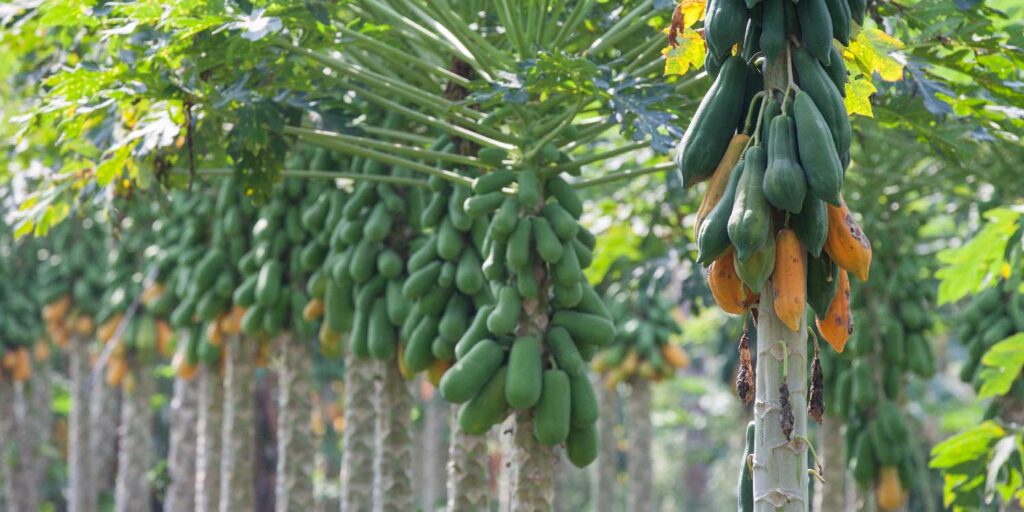
As farmers across Kenya search for high-value crops that mature quickly and require relatively small pieces of land, dwarf pawpaw farming is emerging as one of the most profitable ventures in the horticulture sector.
Unlike traditional pawpaw varieties that grow tall and become difficult to manage, dwarf pawpaw trees grow to a height of only two to three metres, making harvesting, spraying and management easier. The compact nature of the crop allows farmers to maximize land use while enjoying high yields and steady income throughout the year.
Agricultural experts say the growing demand for nutritious fruits both locally and internationally has created a ready market for pawpaw, encouraging more farmers to adopt improved varieties such as Red Royale F1, Calina IPB9 and Solo Sunrise.
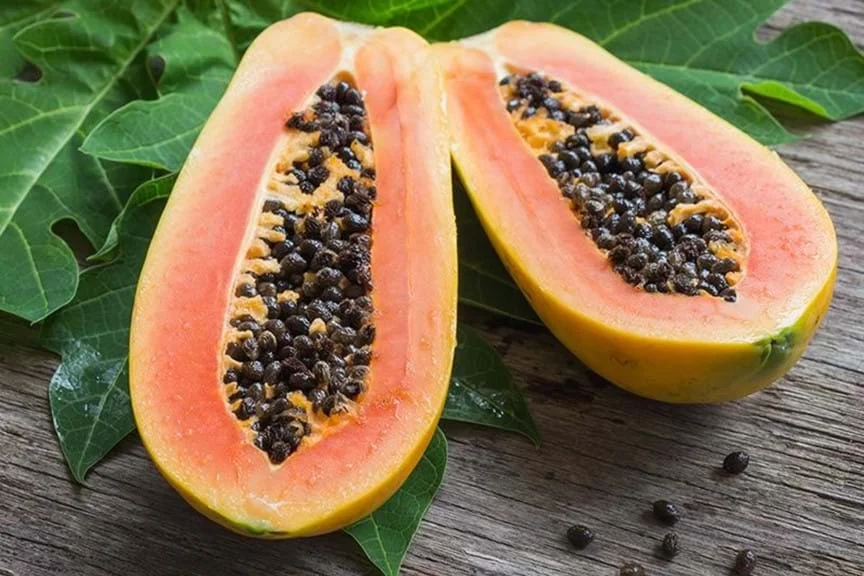
The fruit is highly valued for its nutritional benefits, being rich in vitamins A and C, antioxidants, fibre and papain, an enzyme known for improving digestion. Consumers use pawpaw in fresh fruit salads, juices, smoothies and jams, while processors continue to explore opportunities in dried fruit products and value-added foods.
According to agronomists, one of the major advantages of dwarf pawpaw farming is its early maturity. Under proper management and irrigation, the plants begin flowering within three to six months after transplanting and start producing marketable fruits within eight to twelve months.
This means farmers can recover their investment much faster compared to crops such as coffee, avocado and macadamia, which take several years before generating income.
The crop performs well in both tropical and subtropical regions with temperatures ranging between 20 and 35 degrees Celsius. Areas receiving annual rainfall of between 1,000 and 1,500 millimetres are particularly suitable.
In Kenya, dwarf pawpaw is increasingly being grown in Murang’a, Kiambu, Thika, Machakos, Makueni, Kitui, Mombasa, Kilifi, Kisumu, Bungoma and parts of Nakuru, among other regions.
Agricultural officers recommend that farmers establish the crop in well-drained fertile loam or sandy loam soils with a pH of between 6.0 and 6.5. Because pawpaw is highly sensitive to waterlogging, farmers with heavy clay soils are advised to plant on raised beds to improve drainage and prevent root diseases.
Before planting, farmers are encouraged to prepare the land thoroughly by clearing weeds, ploughing and harrowing to achieve a fine soil texture. Planting holes measuring 60 centimetres by 60 centimetres should then be dug and enriched with well-decomposed manure and fertilizer.
Experts advise farmers to use certified seedlings from reputable suppliers to guarantee disease resistance, uniform growth and high productivity.
After transplanting, seedlings should be watered thoroughly and mulched using dry grass or crop residues to conserve moisture, suppress weeds and improve soil fertility.
Proper spacing is critical for maximum production. Agronomists recommend a spacing of two metres by two metres, allowing approximately 1,000 trees per acre.
The relatively high plant population contributes significantly to the crop’s impressive yields. Under good management, a single tree can produce between 50 and 100 fruits annually, translating to about 25 to 50 kilograms of fruit per plant.
At the farm level, yields ranging between 20 and 30 tonnes per acre are achievable, making dwarf pawpaw one of the most productive fruit crops available to smallholder farmers.
With farm-gate prices averaging between Sh30 and Sh50 per kilogram, farmers can earn between Sh600,000 and Sh1.5 million per acre annually depending on production levels and market conditions.
To sustain high yields, regular irrigation is essential, especially during flowering and fruit development. Drip irrigation is widely recommended because it delivers water directly to the root zone while minimizing wastage and reducing disease incidence.
Fertilizer application also plays a crucial role. During vegetative growth, farmers are advised to apply balanced fertilizers such as NPK 17:17:17, while potassium-rich formulations are recommended during fruiting to improve fruit size, sweetness and shelf life.
Pests and diseases remain among the key challenges facing growers. Common pests include aphids, spider mites and fruit flies, while diseases such as papaya ringspot virus, powdery mildew and root rot can significantly reduce yields.
Agricultural experts recommend integrated pest management practices including field sanitation, use of resistant varieties, proper spacing and timely application of approved pesticides or organic solutions such as neem oil.
Many farmers are also embracing intercropping, growing crops such as beans, onions and spinach between the pawpaw rows during the early stages of establishment. This allows them to generate additional income while maximizing land productivity.
With increasing demand for healthy foods, rising urban consumption and growing opportunities in export and processing markets, agricultural stakeholders believe dwarf pawpaw farming has the potential to transform livelihoods, particularly among youth and small-scale farmers seeking profitable agribusiness opportunities.
As more farmers embrace improved varieties and modern production techniques, dwarf pawpaw is steadily proving that profitable farming does not necessarily require large tracts of land, but rather smart investment, proper management and access to quality planting materials.
By: Samuel Mwangi