Skip to content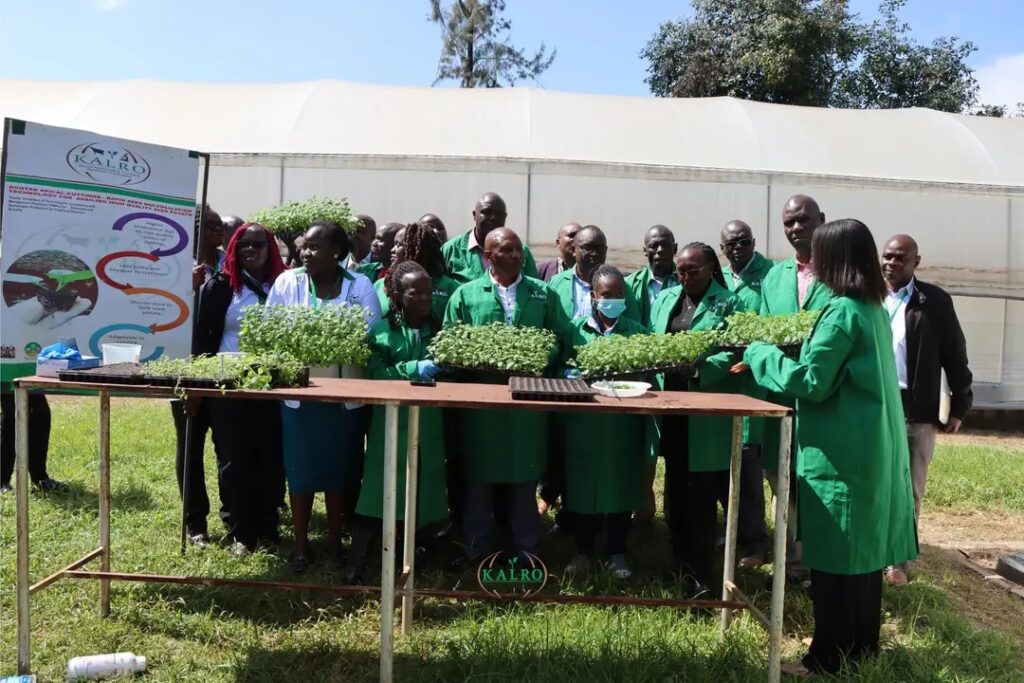
For years, potato farmers in Kenya have struggled with one major challenge — access to clean and certified seed. Most smallholder farmers relied on recycled tubers from previous harvests, a practice that resulted in low yields, increased disease outbreaks, and reduced profits. However, a new technology known as Rooted Apical Cuttings (RACs) is now helping transform potato farming by providing farmers with healthier and more productive planting materials.
The innovation is being spearheaded by the Kenya Agricultural and Livestock Research Organization as part of efforts to bridge the country’s huge potato seed deficit and improve food production.
During a recent visit to the KALRO Horticultural Research Centre in Tigoni and the Dairy Research Centre in Oljoroorok, KALRO Board members witnessed how the technology is changing farming practices and improving productivity among potato growers.
The delegation was led by KALRO Board Chairman Thuo Mathenge and Director General Patrick Ketiem.
According to Dr. Mathenge, RACs are helping farmers start with clean and disease-free planting materials, which significantly improves crop performance.
“Rooted Apical Cuttings provide farmers with healthy planting materials that lower production costs while improving yields and crop quality,” said Dr. Mathenge.
Unlike traditional seed tubers that are often infected with pests and diseases, RACs are produced through tissue culture technology under controlled conditions. Scientists extract young shoots from healthy potato plants and multiply them in laboratories before transferring them to nurseries where they develop roots.
The rooted seedlings are then supplied to farmers for planting in seed multiplication fields, where they produce healthy seed potatoes.
Researchers say the technology helps reduce the spread of common potato diseases such as bacterial wilt and viral infections that have for years affected productivity in major potato-growing regions.
By planting disease-free materials, farmers are now recording better yields and more uniform potato sizes, which fetch higher prices in the market.
KALRO officials noted that the technology is also reducing the cost of seed production because RACs require less space and can produce more planting materials within a short period compared to conventional seed tubers.
The Board also toured other ongoing agricultural innovations at the Oljoroorok centre, including dairy improvement programmes, fodder development, and sweet lupin production aimed at supporting livestock farmers.
Officials observed that such innovations are helping farmers adapt to rising production costs and changing climatic conditions while improving food security.
For many smallholder farmers, RAC technology is proving to be a practical solution to years of seed shortages and declining potato productivity.
Agricultural experts believe wider adoption of the technology could significantly strengthen Kenya’s potato sector by ensuring farmers access reliable and certified seed.
As demand for quality potato seed continues to rise, researchers and stakeholders are now encouraging more farmers to embrace RACs as a sustainable way of increasing production, reducing losses, and improving household incomes.
With continued investment in agricultural research and technology, RACs are increasingly positioning themselves as a major breakthrough in transforming potato farming in Kenya.
By: Samuel Mwangi