Skip to content
Kenya’s dairy sector is poised for a major transformation as the government accelerates efforts to introduce Quality-Based Milk Payment (QBMP), a system that will reward farmers not only for the quantity of milk they produce but also for its quality.
The shift marks a significant step in modernizing the country’s dairy industry, with farmers expected to adopt improved production and milk handling practices that will enhance product quality, increase competitiveness, and unlock access to premium domestic and international markets.
Speaking during the handover of milk cooling equipment to Mukurweini Wakulima Dairy Farmers Limited, Agriculture Cabinet Secretary Sen. Mutahi Kagwe said Kenya’s dairy industry must embrace quality as the foundation for sustainable growth and increased farmer earnings.
“The future of our dairy sector lies in quality. We must move beyond simply producing more milk and focus on producing milk that meets the highest standards for local and export markets,” the CS said.
Kenya currently produces approximately 5.4 billion litres of milk annually, making it Africa’s leading milk producer. However, government officials say future growth will depend on improving milk quality through better animal husbandry, hygiene, and post-harvest handling rather than increasing production alone.
Under the Quality-Based Milk Payment system, farmers who consistently deliver clean, safe, and high-quality milk will receive higher payments. The model encourages investment in proper animal nutrition, routine veterinary care, clean water, disease prevention, hygienic milking practices, and appropriate milk storage and transportation.
Milk with low bacterial counts, free from antibiotic residues and adulteration, and containing higher butterfat and protein levels attracts premium prices from processors and consumers, making quality an increasingly valuable asset within the dairy value chain.
To support the transition, the government is investing in infrastructure aimed at preserving milk quality from the farm to processing plants.
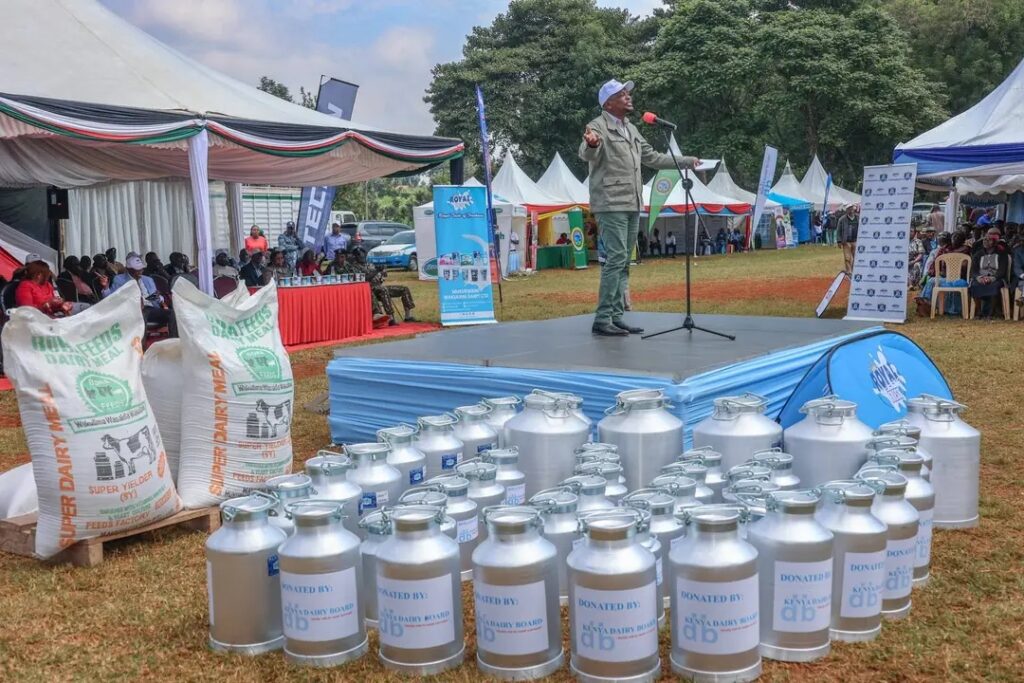
CS Kagwe described milk cooling facilities as a critical investment in improving quality, noting that rapid cooling immediately after collection significantly slows bacterial growth, preserves freshness, minimizes spoilage, and enables farmers to consistently meet quality standards required by processors.
“Milk coolers are not simply storage facilities; they are investments in quality preservation that will help farmers earn more from every litre they produce,” he said.
So far, the government has distributed 32 milk coolers across Nyeri County, benefiting dairy cooperatives including Iriaini, Tekari, Gakindu, Gataragwa, Naromoru and Mukurweini Wakulima Dairy Farmers Limited.
The Cabinet Secretary also challenged dairy farmers to look beyond selling raw milk and embrace value addition as a pathway to higher incomes and stronger export competitiveness.
He said increased investment in processing products such as milk powder, cheese, yoghurt, butter and other dairy products would reduce post-harvest losses during periods of surplus production while creating employment opportunities and expanding Kenya’s presence in regional and global markets.
“We must stop exporting opportunity. By processing our milk into value-added products, we create jobs, reduce waste and earn more from our dairy industry,” Kagwe said.
Milk powder, he noted, offers a strategic solution for preserving surplus milk while ensuring processors can serve markets throughout the year regardless of seasonal production fluctuations.
The government also emphasized the importance of strengthening dairy cooperative societies, describing them as key institutions for improving farmers’ bargaining power, lowering production costs, facilitating access to affordable financing, providing extension services, and maintaining quality assurance systems.
Strong cooperatives, the CS said, also provide an efficient channel for delivering government support programmes and connecting farmers to larger domestic and export markets.
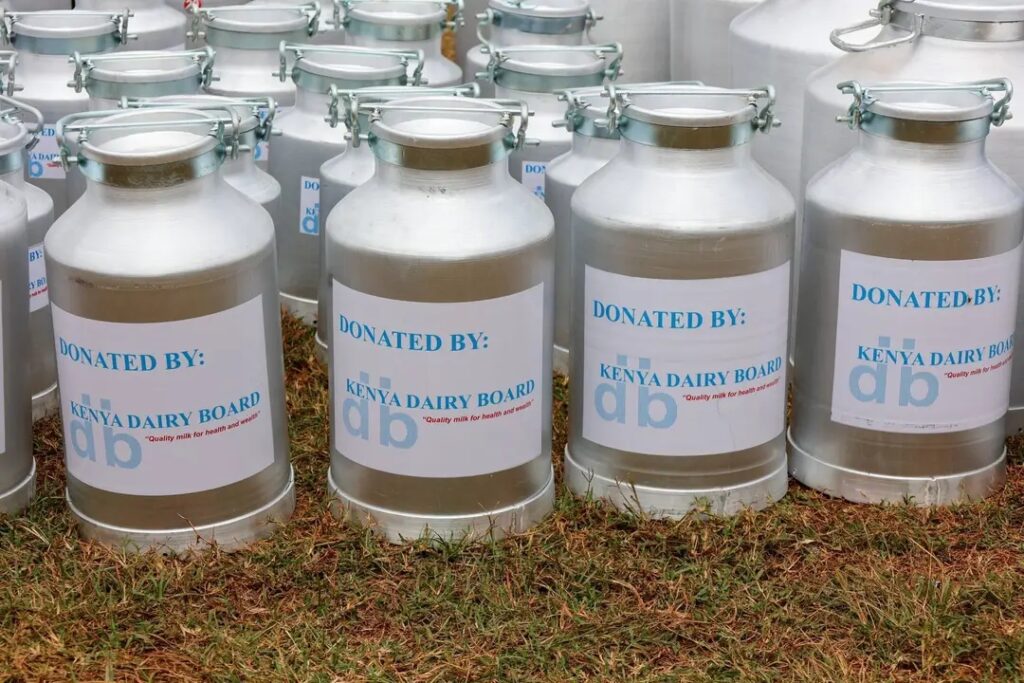
To further improve dairy productivity, Kagwe announced the distribution of 500 doses of sexed semen through the Kenya Dairy Board.
The technology gives farmers up to a 90 percent probability of producing calves of the preferred gender, enabling faster herd improvement, increased milk production efficiency, and improved profitability for dairy enterprises.
Beyond dairy farming, the government reaffirmed its commitment to agricultural diversification by distributing 70,000 coffee seedlings, 70,000 avocado seedlings, and 50,000 macadamia seedlings to farmers. Coffee seedlings, the CS noted, will only be issued to farmers who have prepared planting holes to ensure proper establishment and higher survival rates.
The investments form part of the government’s broader strategy to increase agricultural productivity, diversify farmer incomes, and strengthen Kenya’s food security.
As Kenya prepares to implement Quality-Based Milk Payment across the dairy sector, the message to farmers is becoming increasingly clear: quality will determine future profitability. Those who invest in better herd management, proper milk handling, and strong cooperative systems will be best placed to benefit from premium prices, expanded market opportunities, and the growing demand for high-quality dairy products.
With continued investment in infrastructure, technology, value addition, and farmer support, the government believes Kenya’s dairy industry is well-positioned to become more competitive while delivering greater returns to producers and contributing significantly to national economic growth.
By: Samuel Mwangi