Skip to content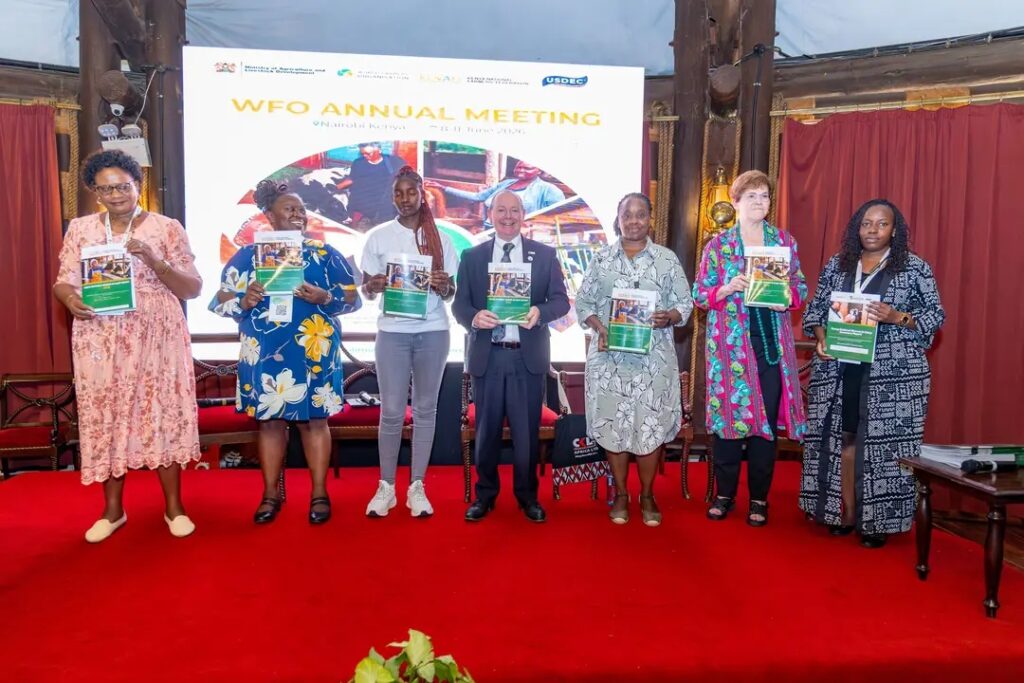
Women remain the backbone of Kenya’s dairy industry, yet limited access to finance, land ownership, and decision-making opportunities continues to hinder their full participation in one of the country’s most important agricultural value chains.
These challenges took centre stage during the Women in Dairy Initiative side event held alongside the World Farmers’ Organisation (WFO) Annual Meeting 2026 in Nairobi, where stakeholders from the dairy sector, development partners, financial institutions, and farmer organizations discussed practical solutions to empower women and strengthen dairy production.
The discussions were informed by the newly launched Women in Dairy Report, developed through a partnership between the Kenya National Farmers’ Federation (KENAFF), the U.S. Dairy Export Council (USDEC), and AfriCCLAN. The report paints a picture of both the significant contribution women make to Kenya’s dairy industry and the barriers that continue to limit their economic potential.
According to the report, women make up approximately 86 percent of dairy cooperative membership across the country. Despite their dominant role in milk production and cooperative activities, nearly 65 percent of women dairy farmers remain excluded from formal credit facilities because they lack land ownership documents and other traditional forms of collateral required by financial institutions.
Stakeholders noted that the financing gap continues to limit women’s ability to invest in improved dairy breeds, quality feeds, modern equipment, and value addition, ultimately affecting productivity and household incomes.
Participants called for innovative financing models that recognize alternative forms of collateral, including livestock ownership, milk delivery records, cooperative membership, and digital transaction histories, to enable more women to access affordable credit.
The forum emphasized that financial inclusion remains one of the most effective ways of accelerating agricultural transformation while improving livelihoods among rural households.
Speaking during the event, Ms. Krysta Harden, President and Chief Executive Officer of the U.S. Dairy Export Council, underscored the importance of investing in women as drivers of agricultural growth and rural development.
“Investing in women means investing in stronger families, stronger communities, and stronger agricultural systems,” she said, noting that empowering women with resources and opportunities creates long-term benefits across the entire dairy value chain.
Participants agreed that women should not only be recognized as producers but also supported to become leaders, entrepreneurs, processors, and decision-makers within the dairy sector.
The discussions also explored policy reforms that can strengthen women’s participation in agricultural cooperatives, improve access to extension services, promote financial literacy, and encourage financial institutions to develop products tailored to the realities of women farmers.
Stakeholders observed that many women possess productive livestock and maintain consistent milk delivery records through dairy cooperatives, yet these valuable assets are rarely considered when applying for loans.
They argued that recognizing such assets as acceptable collateral could significantly increase women’s access to financing while reducing dependence on conventional land title requirements.
Participants further emphasized the need for stronger partnerships between governments, financial institutions, farmer organizations, development partners, and the private sector to develop inclusive financing solutions that respond to the needs of women dairy farmers.
The meeting also highlighted the broader role women play beyond milk production, including livestock management, animal health, feed preparation, household nutrition, and income generation. Despite these responsibilities, many women continue to have limited influence over financial decisions and investment planning within dairy enterprises.
Stakeholders noted that addressing gender inequalities within the dairy value chain is not only a matter of social justice but also a strategic investment capable of increasing productivity, improving food security, and strengthening economic resilience.
As Kenya continues to modernize its dairy sector, participants called for deliberate efforts to remove structural barriers that prevent women from accessing the resources needed to expand their enterprises.
The Women in Dairy Initiative concluded with a shared commitment to promote policies, partnerships, and financial innovations that ensure women farmers have equal opportunities to participate fully in the dairy economy.
Stakeholders maintained that building resilient and competitive dairy systems requires empowering the women who sustain them by providing equal access to finance, technology, markets, knowledge, and leadership opportunities.
By: Samuel Mwangi